-
-
W-199-E, MIDC Khairne, Thane Belapur Road, Navi Mumbai – 400705. India.
How Does Pharmaceutical Water Distribution Loop Work?
21 Sep 2026
How Does Pharmaceutical Water Distribution Loop Work?
A pharmaceutical water distribution loop is a critical part of a high-purity water system. It helps maintain consistent water quality as purified water moves from the storage vessel to different points of use. In the pharmaceutical and biopharma industries, proper loop design, continuous circulation, monitoring, sanitization, and hygienic construction are essential for protecting water quality throughout the distribution network. WHO guidance describes storage and distribution as an integral part of the overall pharmaceutical water system and emphasizes preventing microbial proliferation and recontamination after purification.
What Is a Pharmaceutical Water Distribution Loop?
A pharmaceutical water distribution loop is a circulating network designed to deliver high-purity water from a storage system to multiple points of use and return it to the storage vessel or designated circulation path.
Unlike a simple one-way supply line, a properly designed circulating loop keeps water moving through the system. Continuous movement can help reduce stagnant areas and support consistent water quality. FDA inspection guidance identifies circulation as an important design consideration and notes that constantly moving water is less susceptible to high levels of contamination than stagnant water.
How Does a Pharmaceutical Water Distribution Loop Work?
The basic operating sequence is:
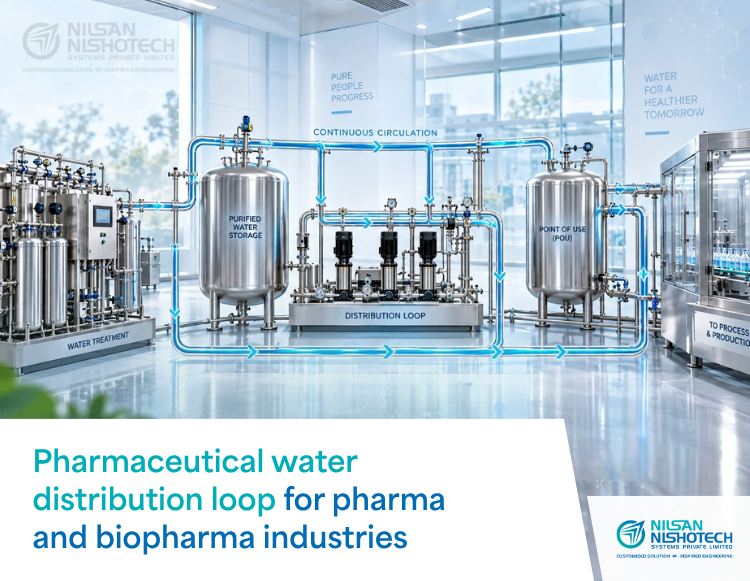
Storage → Circulation Pump → Distribution Loop → Points of Use → Return
High-purity water is held in a suitable storage vessel and circulated through the distribution loop using a pump. Water passes through designated points of use where it is required for manufacturing or other approved applications. The remaining water continues through the loop and returns to the circulation path.
This arrangement allows the system to continuously circulate water rather than leaving sections of the network unused for extended periods.
Why Is Continuous Circulation Important?
Continuous circulation helps minimize stagnant conditions within the distribution network. Stagnation can create conditions that support microbial growth and biofilm formation. FDA has identified dead legs and stagnant areas as potential concerns in high-purity water systems.
What Are the Key Parts of a Water Distribution Loop?
A typical pharmaceutical distribution arrangement can include:
- Storage vessel
- Circulation pump
- Distribution piping
- Valves and sanitary connections
- Points of use
- Sampling points
- Monitoring instruments
- Sanitization arrangements
Each part should be considered as part of the complete system rather than as an isolated component.
How Does Loop Design Protect Water Quality?
The design of the distribution loop has a direct effect on water quality. Piping should support appropriate circulation, drainage, cleaning, and sanitization. Materials that come into contact with pharmaceutical water should be compatible with operating and sanitization conditions and should not adversely affect water quality. WHO guidance specifically addresses material compatibility, prevention of leaching, corrosion resistance, and controlled joining of components.
What Are Dead Legs and Why Are They Important?
A dead leg is an unused section of piping where water movement is limited or absent. Such areas can create conditions favorable to microbial growth.
For this reason, distribution-loop design should minimize unnecessary stagnant sections and ensure that points of use and connections can be effectively managed during operation and sanitization. FDA inspection guidance specifically calls for attention to dead legs and sanitary connections.
How Is a Pharmaceutical Water Loop Monitored?
Monitoring helps verify that the distribution system remains under control.
Depending on the water system and its intended use, monitoring may include parameters such as conductivity, TOC, temperature, flow, pressure, and microbiological quality.
Monitoring should not be limited to isolated results. Reviewing historical data and trends can help identify gradual changes in system performance and support timely investigation when unusual patterns appear.
How Is the Loop Sanitized?
Sanitization is an important part of maintaining the microbiological condition of a pharmaceutical water distribution system. The sanitization approach should be appropriate for the system design and validated operating requirements.
The procedure should ensure effective exposure of relevant sections, including points of use and other areas where water may otherwise remain stagnant.
What Happens During an Excursion?
If a monitored parameter or microbiological result exceeds an established limit, the event should be handled through the facility's approved investigation and quality procedures. The system history, possible causes, and potential impact should be evaluated before corrective actions are decided.
Why Are Sampling Points Important?
Sampling points should provide meaningful information about the condition of the distribution system. A well-planned sampling strategy should cover relevant areas of the loop and support representative monitoring.
Can a Distribution Loop Serve Multiple Points of Use?
Yes. A properly designed loop can distribute high-purity water to multiple points of use, provided that the system is appropriately sized, controlled, monitored, and maintained for the intended application.
Pharmaceutical Water Distribution Loops in Pharma and Biopharma
In the pharmaceutical and biopharma industries, the distribution loop is not simply a piping arrangement. It is an important part of maintaining water quality after purification.
The system should be designed around the intended water quality, number of users, flow requirements, sanitization strategy, monitoring needs, and facility layout. WHO guidance recommends that storage and distribution work together with the purification system to consistently deliver the required water quality to user points.
What Should Plant Heads and Project Managers Check?
Before approving or modifying a pharmaceutical water distribution loop, decision-makers should consider:
- Is the loop continuously circulating as intended?
- Are dead legs and stagnant areas minimized?
- Are sampling and points of use appropriately positioned?
- Is the system easy to sanitize and maintain?
- Do the drawings match the installed system?
- Are monitoring results consistently reviewed and trended?
- Can the system support future production requirements?
These questions can help identify design and operational risks before they affect production or water quality.
How Nilsan Nishotech Supports Pharmaceutical Water Systems
Nilsan Nishotech focuses on high-purity water systems for the pharmaceutical and biopharma industries, with attention to system design, storage, distribution, monitoring, sanitization, and application-specific requirements.
For a reliable pharmaceutical water distribution system, the objective is to maintain consistent water quality from the storage vessel through the distribution loop and up to every intended point of use.
Frequently Asked Questions
What is a pharmaceutical water distribution loop?
It is a circulating network that delivers high-purity water from storage to multiple points of use while supporting consistent water quality.
Why is circulation important?
Continuous circulation helps reduce stagnant conditions that may contribute to microbial growth and biofilm formation.
What is a dead leg in a pharmaceutical water system?
A dead leg is an unused or poorly circulated section of piping where water can stagnate and create contamination risks.
What parameters are monitored?
Depending on the system, monitoring can include conductivity, TOC, temperature, flow, pressure, and microbiological quality.
Why is sanitization important?
Sanitization helps control the microbiological condition of the distribution system and should be appropriate for the system's validated operating requirements.
Conclusion
A pharmaceutical water distribution loop plays a vital role in maintaining high-purity water quality after generation. Effective circulation, hygienic design, appropriate materials, representative sampling, monitoring, sanitization, and maintenance all contribute to reliable system performance.
For Plant Heads and Project Managers in the pharmaceutical and biopharma industries, the key is to treat the distribution loop as a critical part of the complete water system rather than simply as a network of pipes.
A properly planned and controlled distribution loop can support consistent water quality, reliable delivery, and long-term operational performance.
For high-purity water distribution system solutions for pharmaceutical and biopharma applications, contact Nilsan Nishotech at info@nilsan-nishotech.com.